Category Archives: Reflections

Mortal Remains

I just recorded a bunch of songs about death. Why? Fr. John Behr, Regius Professor of Humanity at the University of Aberdeen, has often remarked on how the biggest societal change in modern times has not been the invention of electric lights, air travel, or even the internet, but the fact that our way of dealing with death has been so drastically altered—the “disappearance of death,” he calls it.

By the ‘disappearance’ of death, I do not of course mean that we no longer die, but rather the troubling eradication of the presence of the dying and the dead from our living space. Instead of death happening at home, with the dying one cared for by family and neighbors, who then tend to her or his body till she or he can be commended to God and entrusted to the earth, death has now become largely consigned to the hospital, where ‘life’ is preserved as long as possible, and when it becomes unfeasible the ‘life-support’ machine is switched off, with the family allowed a brief period of mourning with the corpse before it is handed over to the mortician, culminating in a ceremony at which the corpse is increasingly not present (having already been disposed of) but the past ‘life’ of the departed celebrated. In a very real sense, we today live as hedonists (as if this life in the body as we know it is what it is all about) and die as Platonists (the chains of the body now being removed and disposed of, so that we can, unfettered by the reality of the corpse, celebrate the past ‘life’ of the person), all of which displays a very ambiguous attitude towards our embodiment. It would not be an exaggeration to say that this is the greatest change in the history of the human race: everyone, everywhere, from time immemorial had to deal with death in an immediate, familial, manner until its industrialization over the course of the twentieth century.
Continue reading

Restitutio Omnium, Part 4: But What About…

If over the course of the first 3 parts of this series I’ve in any way obscured rather than clarified my thesis, let me here explain it… No, there is too much; let me sum up: I believe—through Scripture, tradition, and reason—that because God is all-Good, all-Knowing, and all-Loving, he, though he allows evil for a time in his Creation, will defeat all evil and save all creatures. He necessarily wants to save all because he loves all, knows how to save all because he knows all, and has the power to save all because he is ‘all-mighty.’ He will do this without violating any rational creature’s free will because free will, by nature, is teleological—always looking for the ultimate Good (who is God)—and will, by God, eventually be liberated from whatever ignorance, error, or pathology that might keep it from recognizing and turning to the loving Maker of all. Again, reason emphatically leads to this conclusion, but Scripture and tradition also support it, though with language ambiguous enough to allow others to reach different conclusions and present objections to this thesis of universal restoration. I now want to address some of those objections head-on.

Continue reading

Restitutio Omnium, Part 3: Scripture and Tradition

I’m neither a Biblical nor Patristics scholar. I don’t know classical or koine Greek, don’t know Latin, and I’m not well-read-enough even in translated primary sources to claim any expertise. But I have been expanding my knowledge of both the Bible and the Tradition of the Church through amateur study as much as I can. And as my moral and philosophical reasoning over these last 8 to 10 years has increasingly discerned the necessity of a total reconciliation of all rational creatures to their Creator, I have happily learned that, contrary to my long-held indoctrinated position, the Scriptures and Tradition (of which the Scriptures are really a part) not only do not disprove the notion of restitutio omnium, but they amply support it.

Continue reading

Restitutio Omnium, Part 2: The Freeing of Free Will

In part 1 of this series, I highlighted how the problem of evil is probably the single greatest challenge to the idea that the Creator of all things could be (as Christians would have it) simultaneously all-knowing (omniscient), all-powerful (omnipotent), and all-good (omnibenevolent). The only solution to God allowing evil in this world at all is that he must have plans to not only conquer all evil, but to transform it into a good which, by comparison, is inconceivably better than the evil was bad. And crucially, this he would do in a total way, for all things, rescuing and restoring and redeeming and recreating everything (restitutio omnium) which had been touched by evil, or else one or all of his “omni” characteristics would be false. According to the logic of the very nature of God, he would want to save all because he loves all, would know how to save all because he knows all, and would have the power to save all because he is ‘all-mighty.’ After all, what could stop the power of God?

Continue reading

Restitutio Omnium, Part 1: The Logic of the “Omnis”

“And the gates of that city shall not be shut at all by day: for there shall be no night there.” Apoc. 21:25

“Jesum Christum, quem oportet quidem caelum suscipere usque in tempora restitutionis omnium…” Actus 3:21

When I started this blog fifteen years ago, I had just been getting used to a new concept that, for me, felt like it not only made everything I knew and believed cohere together as never before, but also gave me an almost mystically altered perspective on reality. The idea of everything being part of one huge all-encompassing narrative, a meandering yet structured story, changed the way I thought of history, philosophy, and theology. Since then, in the intervening years, I’ve been growing more and more convinced and convicted about an extremely important aspect of our one world story, and I’ve been wanting to get my thoughts about it written down. My thoughts are of course really other peoples’ thoughts, which I’ve read and listened to and digested and weighed internally against everything else that’s in my mind and heart, and finally assented to and owned, I hope with logic and humility, to make them my own.

The problem of evil in Creation is the most reasonable challenge to Christianity and its doctrine that God is all-Good, all-Knowing, and all-Powerful. If God is each of those, then why do evil things happen and creatures experience pain? No doubt some of the pain we all experience is the result of our own actions—pains which we’ve brought upon ourselves. But not every evil visited upon us is our own doing.

Continue reading

Christianity or Nihilism: the Inevitable Binary

“…If Christ is risen, nothing else matters. And if Christ is not risen—nothing else matters.”
Jaroslav Pelikan

This pithy summary of the meaning of history from historian Jaroslav Pelikan is probably his best known quotation. Its main point—that the resurrection of Jesus Christ two thousand years ago is the single event in the history of the world so important that upon its veracity hangs the meaning of everything before and after it—is laid out in brilliant and bold simplicity.

But, as is sometimes necessary in such a powerful and compact statement, within it is buried an implied clause. It’s not totally accurate that nothing else matters if Christ is risen, but rather that nothing matters apart from the resurrection of Christ. The truth of this historical claim is the linchpin upon which the doctrine of the Incarnation of God—and his project to rescue humanity from the futility of a life that terminates in the shadowing nothingness of hades apart from our Creator and source of being—is completely dependent.

Continue reading

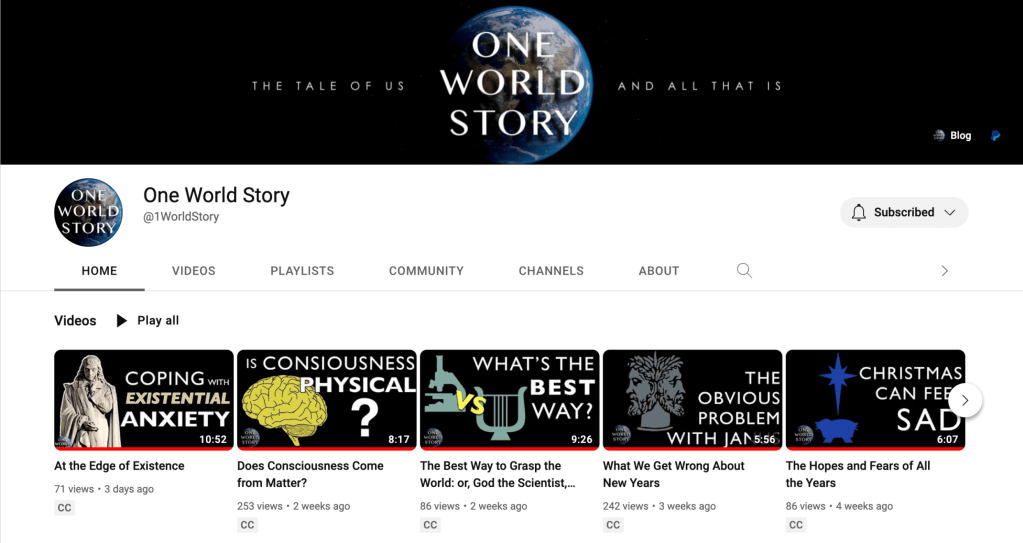
Youtube Channel!

This blog is old. By the standards of the internet anyway. I have content going way back to a time in my life that seems almost a world away, given all that’s transpired in my life since I began this thing. But, since I’ve recorded many of those progressive life changes on this blog, not just in the outer circumstances of my life, but of the development of my thought, it has sort of has helped me to stay connected by a rational continuity between where I was spiritually and philosophically all those years ago to now. And reading back through all of those records of thought, I’ve decided that some of it is pretty decent—and even, with a little tweaking, might deserve a slightly broader audience.

Continue reading

Life Begins at Conception: So What?

What follows began as a correspondence five years ago via social media with some one I know who challenged my claim that it’s undeniable both scientifically and logically that humans are humans from the moment of fertilization (with the creation of a new zygote, in biological terms). I had been trying to unflinchingly draw attention back to that singular, foundational, undeniable fact while news outlets and pundits were routinely shifting conversation away from that reality to any other subject they could possibly link to the pro-life / pro-choice debate (like the inconsistencies of some pro-life advocates regarding other policy issues, such as the death penalty, war, health care, etc). My response was once again to double down on the irreducible importance of acknowledging the full humanity of the new human creature from the moment of conception/fertilization, but then to move on to answer some legitimate policy questions that may follow from that premise, adding that, unlike the scientifically and logically demonstrable premise, my answers regarding policy were completely my own opinion. I’m glad I had the chance to differentiate between the objectivity of the premise and a more personal, perspective-relative grounding of my own policy thoughts following from that. And five years later, with a challenge to abortion currently in deliberation within the Supreme Court, I hope some of my theoreticals may prove to be sensical and compassionate.

Continue reading

On The Threshold of Now

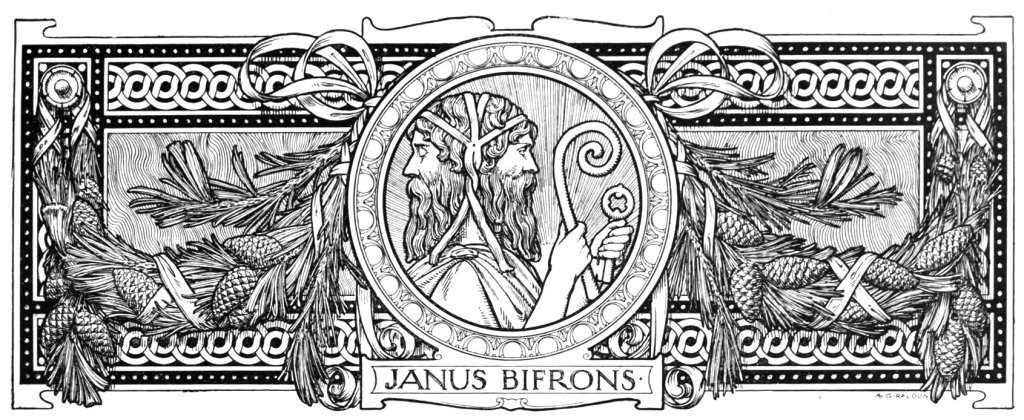
Janus, the personification of thresholds, beginnings, and endings, has had many depictions over the centuries. Common to them all and distinguishing him from every other occupant in the pantheon of Roman deities were his two faces opposite each other on either side of his head. He looked both ways with his two faces, and this, the Romans thought, made him the perfect god to preside over the boundary between any two given situations: war and peace, earth and heaven, past and future. He was the doorkeeper, the boundary master.

One conspicuous difference you’ll notice among Janus’ many depictions is that in some, his two faces are identical, and his head a perfectly symmetrical mirror image; while in others, his two faces are markedly different, one side bearded while the other side is not, or one side visibly aged while the other side is youthful.

Continue reading

The Hopes and Fears of All the Years

In A Charlie Brown Christmas, Charlie Brown is depressed. He doesn’t feel very uplifted by the approach of Christmas, ostensibly because it has gotten “commercialized,” but really, as he admits to himself early in the special, because he perceives that nobody likes him, so, “Why do we have to have a holiday season to emphasize it?” Charlie Brown’s self-derision is healed in the end by the kindness and closeness of his friends. But many more people besides Charlie Brown struggle at Christmastime, either because they also think that nobody likes them, or else because the memory of lost loved ones becomes more painful now, or else because the changes they’re seeing all around them—the increased crowds and clamor; the repellent false sentimentality and self-interestedness of actual commercialization; the growing darkness, both spiritual and literal—just puts extra stress on them.

Continue reading

Via pulchritudinis, non via satirae


There’s a famous anecdote about the emissaries of Vladimir the Great who were sent out to neighboring states to find some religion that might unify the sundry peoples under Vladimir’s rule. After rejecting several options (Judaism, Isalm, Germanic Catholicism) they came to the Hagia Sofia in Constantinople, about which they reported later: “We knew not whether we were in Heaven or on Earth… We only know that God dwells there among the people, and their service is fairer than the ceremonies of other nations.” And thus, as the story would have it, beauty brought the kingdom of the Rus into the Eastern Orthodox orbit. A thousand years later, Pope Benedict XVI spent much of his career emphasizing the privileged place of the Way of Beauty—the Via Pulchritudinis—as the most attracting mode of evangelizing an increasingly secular world.

Continue reading

Kinetic Composition

I’ve been fascinated for a while now with a particular artistic motif which depicts King David, ruler of ancient Israel and credited author of many of the Psalms, in the rapturous throes of composing. Many images of David with his harp/lyre can be found dating right back through the early middle ages, but many of these are also of a somewhat static, poised David. As art became more expressive of emotion in the Renaissance and beyond, the figure of David became more dramatic. And David, as an artistic figure, is particularly suited for drama. Continue reading

Meat Sacks

We’re all just meat sacks animated with electricity for a little while. Once our brains quit sparking, there’s no consciousness left and no meaning left. The whole world disappears every time a brain dies (the world being only a subjective construct). This being the case, morality is just another feature of each brain’s construct of reality, not a real objective thing outside of ourselves. In other words, it’s not real, and anything and everything is totally permissible because any suffering that is caused is only temporary and will end in oblivion as if it never existed. Because there’s no enduring, conscious perspective in the universe, nothing matters in the end, which means nothing ever mattered from the beginning. There is no cosmic justice. All of our “justice” is just the tinkering of clever apes and, ultimately, just accidents of physics.

Continue reading

The Assumption of Mary

Maria est assumpta

Why do the Roman Catholic and Orthodox churches celebrate the assumption of Mary? It turns out, it’s because of Easter.

But Easter has to do with Jesus, and this feast day is about Mary, right? As with all celebrations of the Saints, of course, it’s Jesus who shines through them to receive the highest and ultimate praise. When we depict the Saints in our iconography, they have a halo around their heads; that halo is the light of Christ shining out of them. They have surrendered their old life, the mere life of bios—biological life—in exchange for zoe, the divine life that is God himself, united to human nature in Jesus Christ, and shared now with all his brothers and sisters, if they will receive it. Those who shine through with that light most brilliantly, who have evidenced to the Church that their lives are full of the Christ-life, we call Saints.

And so a feast day for a Saint is never really just about that Saint. It’s always about Christ who that Saint conforms to. There are some Christians who think of the Kingdom of heaven as a zero sum game, where any praise a Saint gets is praise that God isn’t getting. But that’s not how the Kingdom works at all. Christ glories in his Saints, and his Saints glory in him. Christ’s glory is not diminished when we celebrate those who belong to him; just the opposite—his glory increases. And so let’s look to Mary, and see how she increases her Son’s glory. Continue reading
The Exorcist: A Love Story

I recently read The Exorcist, the classic 1971 novel by William Peter Blatty (on audiobook and narrated by the author himself!). I imbibed the book, is more what I did. I was immediately drawn into this story of a demon-possessed young girl and her devoted mother whose tireless efforts at finding a remedy for her condition ultimately secure the ministrations of a Jesuit psychologist (Fr. Damien Karras) and a mysterious elderly exorcist (Fr. Lankester Merrin). Blatty’s poetic prose, his evocative scene-setting, character descriptions, and philosophic inner monologues all make the book a delight to read. The subject matter of the novel—a demon possession—also helps to keep the reader riveted, of course. >>Spoilers ahead<<

Continue reading

An Ape’s Contentment

The following paragraphs contain some of the most poignant and simultaneously soul-sapping words I’ve ever read. I won’t waste time on any commentary except to say that this resonates with me because I know exactly what is meant here from experience. I know the flavor of the banal art produced not by the forgivable immaturity of atheistic communism (which at least had real conviction) but by the comfortable, horizonless, dead-endedness of a society that only rises to the level of pretend conviction at most, and more often only ape-ish itching and scratching:

Continue reading

At Sea in America

horizon 2

The Declaration of Independence is an astounding document. It’s short (you should read it). The majority of its content is actually an enumeration of “injuries and usurpations” by the British monarch King George III against the American Colonies, but the most interesting part is the first three sentences which give a rationale for why it is necessary for “one people to dissolve the political bands which have connected them with another.” The following “unalienable rights” that the Declaration lists—Life, Liberty, and the pursuit of Happiness—would become the shorthand for what America stands for, and would be the lifeblood of the next great document to be produced by the new country: the Constitution. G.K. Chesterton once observed, “America is alone in having begun her national career with a definite explanation of what she intended to be. And this is an experiment of the highest historical and philosophical interest.”

Continue reading

The Pro-Choice Motive

ireland abortion

A recent referendum in Ireland followed the popular vote of the people there and lifted a constitutional ban on abortions when the mother’s life is not endangered. The legislation has yet to be drafted, but it’s likely to permit abortions now for the broadest of reasons, up to three or six months—who knows. I kept tabs on news stories there during the run up to this vote, and from what I witnessed in pictures of rallies, saw in comment sections and read in published articles from both sides, the pro-life side was, on the whole, more civil and polite, and the pro-choice side was, on the whole, more rancorous, insulting, and boastful. I’ve seen the same thing here in the States. In the visible public square, the proponents of the pro-choice movement behave more poorly than their opposition, have ruder signs and more vulgar slogans. But clearly, the pro-choice camp is the majority in the entire Western world now. And I don’t believe all of them are the rancorous rally-ers and picketers in the images featured in news articles. Continue reading

The Tools of the Spiritual Craft

benedict_back

From Chapter 4 of the Rule of Saint Benedict:

First of all, love the Lord God with your whole heart, your whole soul and all your strength, and love your neighbor as yourself. Then the following: you are not to kill, not to commit adultery; you are not to steal nor to covet; you are not to bear false witness. You must honor everyone, and never do to another what you would not want done to yourself.

Renounce yourself in order to follow Christ; discipline your body; do not pamper yourself, but love fasting. You must relieve the lot of the poor, clothe the naked, visit the sick, and bury the dead. Go to help the troubled and console the sorrowing. Continue reading

New Blog!

Screen Shot 2018-03-06 at 10.29.18 PM

So, I have a new blog now! As in, I now have two blogs; I’m not replacing this one. I’ve been asked to be a contributing blogger on the new website OrthodoxWest.com. This new site will include blogs, media, and articles on various topics related to the Western Rite in the Orthodox Church, particularly in the Antiochian Archdiocese of North America. Continue reading

Open Thou My Lips

open thou my lips

Domine labia mea aperies: Et os meum annunciabit laudem tuam.

The heavens declare the glory of God.  The skies proclaim his handiwork.  Trees and mountains can sing to God together, and even the rocks could start crying out.  But I can’t seem to open my mouth to pray.

The phenomenon, I’m assured, is not unique to me. Prayer is hard to do. Continue reading

Monarchy*

regalia

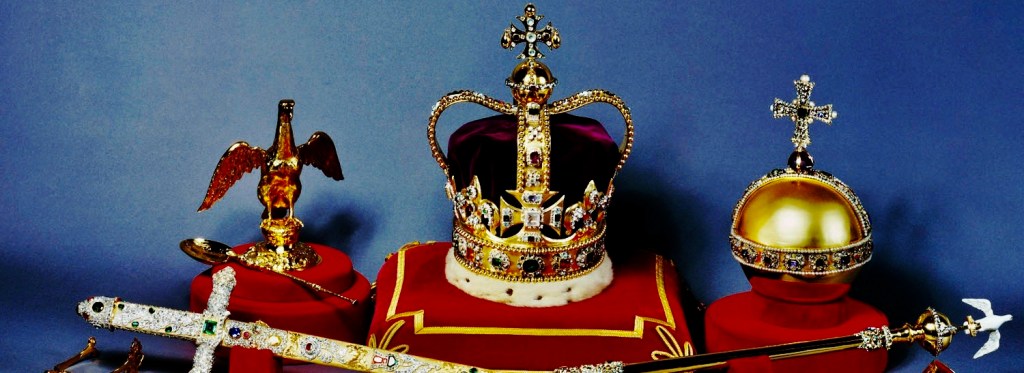
I’m generally not for the new trend of bio-pics about currently living people (Barry, Snowden, The Iron Lady, The Social Network, The Theory of Everything). While depicting figures from the past brings them back to “life” in a fictional sense, depicting living figures seems to me to be robbing them of their own ongoing, real drama in this world. Their story isn’t yet finished, so it’s objectionable to try to tell it—even a portion of it—because the end of their narrative, the conclusion that is necessary to cast the final light over all the rest of it, hasn’t yet come to pass. But I’ve made an exception in watching the Netflix original series The Crown, because the living figure which it depicts is exceptional. Continue reading

Soul Attack

autumn_river_forest_trees_landscape_2144x1424

A pang of emotion shot through my stomach the other day—a stab of mysterious longing that unbalanced me as I was returning to the office from my lunch break. Transcendental yearning overwhelmed my faculties in the parking lot, and under the weight of my own soul, saturated with qualia, my knees weakened. I had a soul attack. Continue reading

The Things that Go Bump

Ghost

In October the nights get longer and the air gets colder. For the ancient agrarian Celts in the British Isles, this time marked the end of the growing season for crops. They would have to harvest as much food as they could to last them through the winter, but if there was a poor yield, the anxiety of that problem would be settling in right about at the end of October. Winter, that cold and dark time of year when the danger of sickness and starvation is at its height, would just now be reaching the tips of its icy fingers into people’s lives, and the dread of death, even the memory of death in previous winters, would intensify. With this recalled memory of death, the veil between this world and the invisible one was either imagined to be, or else truly perceived to be by those with the sight to see it, made thinner. Continue reading

It Happened at Night

2-4-e1507915473260.png

One night in 2008 I awoke in the middle of the night to a strange sound. I was still groggy, and as I blinked my eyes to try to get them to focus in the darkness of the room, the sound became louder. All at once I was inexplicably certain that the sound was that of massive, feathered wings beating—not as if they were in flight, but just as if they were flapping for the effect of their sound, since they were clearly flapping in the same place: at the foot of my bed. Continue reading

How The Early Church Viewed The Eucharist

Eucharist window

In a recent post I summarized my Faith journey into the Orthodox Church. I wanted to include a section in that post on the very important topic of the Eucharist in order to highlight maybe the most striking difference between what I grew up believing and what classical Christianity teaches. I didn’t include it in that post because it would have made it much too long, but I did save what I had written about it. That section is what follows here: Continue reading

The Age of Reason and The Age of Faith

scriptorium

On this blog, I try to emphasize the importance of stories. The stories we tell shape our minds and hearts — they shape the very way we perceive the world. And when those stories are about our own history, what’s at stake in the telling of them is both our worldview and our sense of self.  Telling the story of Western civilization is a tall order: that story must weave characters, events, institutions, and geography into a coherent order with a coherent logic. It must not only describe events, but imply causalities; it must not only describe characters’ actions, but suggest their motives. Otherwise, the history may be factual, but it will not be meaningful. To be useful to us, it must be a story. Continue reading

The Last First Step

Last First Step

Back in 2011 I started writing a series of posts entitled “According to the Whole” which was focused on exploring the issue of Christian disunity and where I was looking for possible solutions. The posts were personal and were informed by my own intellectual and experiential journey, but they weren’t overtly autobiographical. I used them to ask questions, make diagnoses, and offer prescriptions in a general sense, but I didn’t use them to tell much of my story. Now my story which spawned those questions and thoughts has reached a definitive point, even a conclusion of sorts, and I want to finally tell it. Continue reading

The Mystical Supremacy of Choice

consuming

David Bentley Hart on the nihilism behind our idea of freedom:

“We live in an age whose chief value has been determined, by overwhelming consensus, to be the inviolable liberty of personal volition: the right to decide for ourselves what we shall believe, want, need, own, or serve. The ‘will’, we habitually assume, is sovereign to the degree that it is obedient to nothing else, and is free to the degree that it is truly spontaneous and constrained by nothing greater than itself. This, for many of us, is the highest good imaginable. And a society guided by such beliefs must, at least implicitly, embrace and subtly advocate a very particular moral metaphysics — that is, the non-existence of any transcendent standard of ‘The Good’ that has the power or the right to order our desires toward a higher end. Continue reading

Is God An Old Man?

genesis.jpg

Or, A Primer on Depicting the Trinity

In the Western Tradition of the Church, yesterday was Trinity Sunday. This always comes the Sunday after Pentecost, and it celebrates the reality that God has been revealed to us as the Father, the Son, and the Holy Spirit. The Eastern Tradition recognizes that this complete revelation of God occurs on Pentecost, when all three persons of the Trinity have been revealed to us, and so Pentecost doubles as Trinity Sunday in the East. Continue reading

Whence Is All the Fervour?

Nye and Tyson

Are you a naturalist or a supernaturalist? That is, do you believe the physical cosmos is all there is and ever has been, or do you allow for some other nature, even transcendent reality, above or behind our nature? If you’re not sure which you are, or if you’re not very confident about why you are whichever you are, I would recommend reading the opening chapters of C.S. Lewis’ Miracles. Continue reading

Team America

If you’ve ever played sports or competed in any way on some kind of team, then you know what it’s like to form a bond with people over a shared purpose or goal. It’s a strange dynamic: a communal identity may form, a pride for the group and its members, a desire to see it succeed. Complete strangers can quickly form deep connections when they’re forced to cooperate to achieve a mutual end — especially when that end is outward oriented, such that a team’s identity depends on a context beyond itself, like a marketplace or a league…or a global stage. Continue reading

The Mothering of God


The fourth Sunday in Lent in the Western tradition is special. It’s known by several names: it’s been called The Sunday of the Five Loaves from the Gospel passage for the day (John 6:1-14); it’s also been called Rose Sunday because the clerical and alter vestments change color from violet to rose  — but why the change in color in the first place? Another name for this Sunday gives us a clue: Laetare Sunday (Laetare meaning: Rejoice).

The Introit or entrance chant for this Sunday begins in Latin: Laetare Jerusalem, et conventum facite omnes qui diligitis eam. (Rejoice, O Jerusalem: and come together all you that love her). This chant is taken from Isaiah 66:10. The call to rejoice here in the middle of this season of repentance is meant as an encouragement to us, a comforting reminder of the tenderness, the nurturing, even the motherliness of God. Continue reading

Is Consciousness Physical?

When we see, hear, smell, or feel something, what’s happening? How do we take in information about the world around us, and how does that information get to us?

When I smell the fragrance of new azalea blooms in my yard, actual microscopic particles emanating from the blooms themselves are wafting through the air, entering my nose, and interacting with my olfactory cells. Anytime you smell anything, there’s physical contact in the form of floating particles occurring between you and the source of the smell. Continue reading

Hate Crimes = Thought Crimes

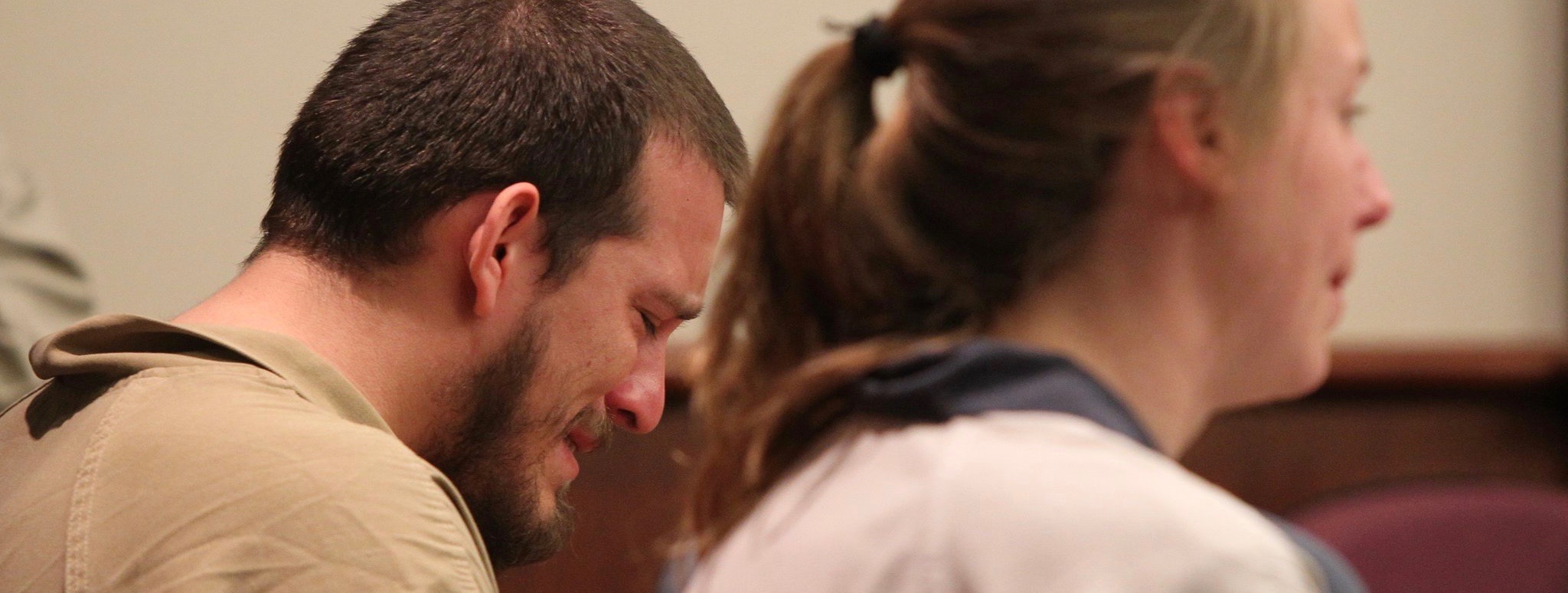
Last month, two Douglas County, Georgia residents were sentenced to notably steep jail time for riding around in a Confederate-flag-laden truck and shouting at, threatening, and pointing guns at black motorists, shoppers, and attendees of an 8 year old’s birthday party. They were participating in a “Respect the Flag” group which, in no uncertain terms, was explicitly promoting white supremacy. But the young couple in question, Kayla Rae Norton, 25, and Jose Ismael Torres, 26, had actually threatened violence, even crashing an African American birthday party with guns drawn.

I can’t begin to imagine the terror the parents and children at that party felt, but I’m glad that terror was translated into a twenty year sentence with thirteen to serve for Torres and a fifteen year sentence with six to serve for Norton. But the judge, William McClain, indicated his verdict was not merely in response to the level of trauma experienced by the victims, but because what the two defendants had committed was a hate crime. Continue reading

Caitlyn and Rachel

caitlyn-and-rachel

The strange saga of Rachel Dolezal, the former NAACP leader who was outed by her parents for pretending to be African American, is continuing with news that she has changed her identity –becoming Nkechi Amare Diallo– and has written a new memoir called In Full Color. In 2015 when Dolezal became a national talking point, when her utterly bizarre success at creating an identity as an ethnic woman of mixed race (both her parents are actually white) fighting the fight of a civil rights leader and champion of black progress was exposed, the popular verdict was that she was an imposter. Here was a white girl trying to be black. Darkening her skin, wearing her hair in dreads, and adopting language and clothing to intentionally identify herself with African American culture. Continue reading

“Christianity” Disambiguated

ethiopians

Ethiopian Orthodox Christians celebrate Easter

The Christian landscape in the world today is multifaceted, varied, and sometimes jaggedly divided. In a world where global news coverage mentions “persecuted Christians in the Middle East” in one breath and “the Christian Right” of America in the next, we may begin to suspect that the simple shorthand “Christian” isn’t quite sufficient for describing the sundry groups it’s supposed to cover. In many places in the world (in the Middle East, for example), the name “Christian” may imply both a distinct culture and a distinct race or ethnicity. It’s beyond my scope to enumerate instances where that’s the case, so instead I want to limit the meaning of “Christian” here to a belief system, a philosophical-religious position. In terms of the content of the belief system (and in some cases the history or tradition of that system), we can divide the Christian landscape of today into some broad distinctions, just to help us navigate better how we use the term. This isn’t any official taxonomy, just some conceptual categories offered for your edification. Continue reading