Tag Archives: Philosophy

Restitutio Omnium, Part 4: But What About…

If over the course of the first 3 parts of this series I’ve in any way obscured rather than clarified my thesis, let me here explain it… No, there is too much; let me sum up: I believe—through Scripture, tradition, and reason—that because God is all-Good, all-Knowing, and all-Loving, he, though he allows evil for a time in his Creation, will defeat all evil and save all creatures. He necessarily wants to save all because he loves all, knows how to save all because he knows all, and has the power to save all because he is ‘all-mighty.’ He will do this without violating any rational creature’s free will because free will, by nature, is teleological—always looking for the ultimate Good (who is God)—and will, by God, eventually be liberated from whatever ignorance, error, or pathology that might keep it from recognizing and turning to the loving Maker of all. Again, reason emphatically leads to this conclusion, but Scripture and tradition also support it, though with language ambiguous enough to allow others to reach different conclusions and present objections to this thesis of universal restoration. I now want to address some of those objections head-on.

Continue reading
Restitutio Omnium, Part 1: The Logic of the “Omnis”

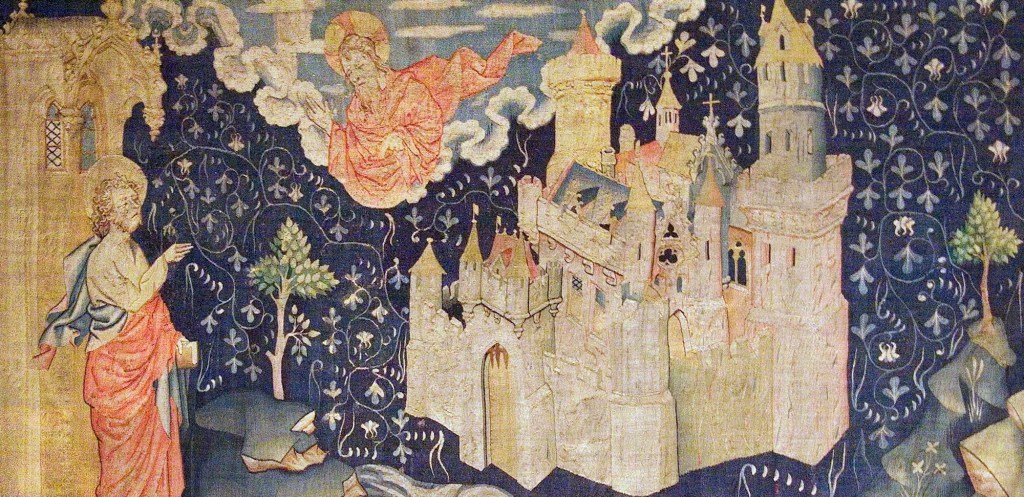
“And the gates of that city shall not be shut at all by day: for there shall be no night there.” Apoc. 21:25

“Jesum Christum, quem oportet quidem caelum suscipere usque in tempora restitutionis omnium…” Actus 3:21

When I started this blog fifteen years ago, I had just been getting used to a new concept that, for me, felt like it not only made everything I knew and believed cohere together as never before, but also gave me an almost mystically altered perspective on reality. The idea of everything being part of one huge all-encompassing narrative, a meandering yet structured story, changed the way I thought of history, philosophy, and theology. Since then, in the intervening years, I’ve been growing more and more convinced and convicted about an extremely important aspect of our one world story, and I’ve been wanting to get my thoughts about it written down. My thoughts are of course really other peoples’ thoughts, which I’ve read and listened to and digested and weighed internally against everything else that’s in my mind and heart, and finally assented to and owned, I hope with logic and humility, to make them my own.

The problem of evil in Creation is the most reasonable challenge to Christianity and its doctrine that God is all-Good, all-Knowing, and all-Powerful. If God is each of those, then why do evil things happen and creatures experience pain? No doubt some of the pain we all experience is the result of our own actions—pains which we’ve brought upon ourselves. But not every evil visited upon us is our own doing.

Continue reading

Christianity or Nihilism: the Inevitable Binary

“…If Christ is risen, nothing else matters. And if Christ is not risen—nothing else matters.”
Jaroslav Pelikan

This pithy summary of the meaning of history from historian Jaroslav Pelikan is probably his best known quotation. Its main point—that the resurrection of Jesus Christ two thousand years ago is the single event in the history of the world so important that upon its veracity hangs the meaning of everything before and after it—is laid out in brilliant and bold simplicity.

But, as is sometimes necessary in such a powerful and compact statement, within it is buried an implied clause. It’s not totally accurate that nothing else matters if Christ is risen, but rather that nothing matters apart from the resurrection of Christ. The truth of this historical claim is the linchpin upon which the doctrine of the Incarnation of God—and his project to rescue humanity from the futility of a life that terminates in the shadowing nothingness of hades apart from our Creator and source of being—is completely dependent.

Continue reading

Meat Sacks

We’re all just meat sacks animated with electricity for a little while. Once our brains quit sparking, there’s no consciousness left and no meaning left. The whole world disappears every time a brain dies (the world being only a subjective construct). This being the case, morality is just another feature of each brain’s construct of reality, not a real objective thing outside of ourselves. In other words, it’s not real, and anything and everything is totally permissible because any suffering that is caused is only temporary and will end in oblivion as if it never existed. Because there’s no enduring, conscious perspective in the universe, nothing matters in the end, which means nothing ever mattered from the beginning. There is no cosmic justice. All of our “justice” is just the tinkering of clever apes and, ultimately, just accidents of physics.

Continue reading

Is Consciousness Physical?

When we see, hear, smell, or feel something, what’s happening? How do we take in information about the world around us, and how does that information get to us?

When I smell the fragrance of new azalea blooms in my yard, actual microscopic particles emanating from the blooms themselves are wafting through the air, entering my nose, and interacting with my olfactory cells. Anytime you smell anything, there’s physical contact in the form of floating particles occurring between you and the source of the smell. Continue reading

The Best Banana Pudding — Part 1

nana pudding (1)

All over the world people have argued about whose grandmother makes the best such-and-such sweets. In Greece it’s whose Yia-yia makes the best baklava. In Russia it’s whose Babushka whips up the best pastila. In the American South, it might just be whose Meemaw makes the best banana pudding. The trouble with these friendly arguments, of course, is that there can never really be an objective winner. Every dutiful grandson or granddaughter will, if not for sheer loyalty then at least for mere conditioning, always prefer their own grandmother’s culinary concoction. This preference will be built by a number of factors—the memories and sentiments it conjures, the familiarity principle—but the preference will be anything but objective. Continue reading

Story

hu0210615
I’ve come to a point in my life, via many roads merging and intersecting with many ideas and experiences, where I can not only look back over my own journey, but over a sweeping landscape that goes way beyond where I began. It’s a (self) realization that ironically has taken me way past myself. What I’ve realized is the history of the world is massive. If every day this world has seen, every thought, accomplishment, and life of every human being, every town, society, and people group were a raging torrent flowing through the wide channel of time, I am, comparatively, a single cubic inch of water somewhere within it being swept along, completely affected, completely unaffecting. Continue reading