Tag Archives: Religion

Christianity or Nihilism: the Inevitable Binary

“…If Christ is risen, nothing else matters. And if Christ is not risen—nothing else matters.”
Jaroslav Pelikan

This pithy summary of the meaning of history from historian Jaroslav Pelikan is probably his best known quotation. Its main point—that the resurrection of Jesus Christ two thousand years ago is the single event in the history of the world so important that upon its veracity hangs the meaning of everything before and after it—is laid out in brilliant and bold simplicity.

But, as is sometimes necessary in such a powerful and compact statement, within it is buried an implied clause. It’s not totally accurate that nothing else matters if Christ is risen, but rather that nothing matters apart from the resurrection of Christ. The truth of this historical claim is the linchpin upon which the doctrine of the Incarnation of God—and his project to rescue humanity from the futility of a life that terminates in the shadowing nothingness of hades apart from our Creator and source of being—is completely dependent.

Continue reading
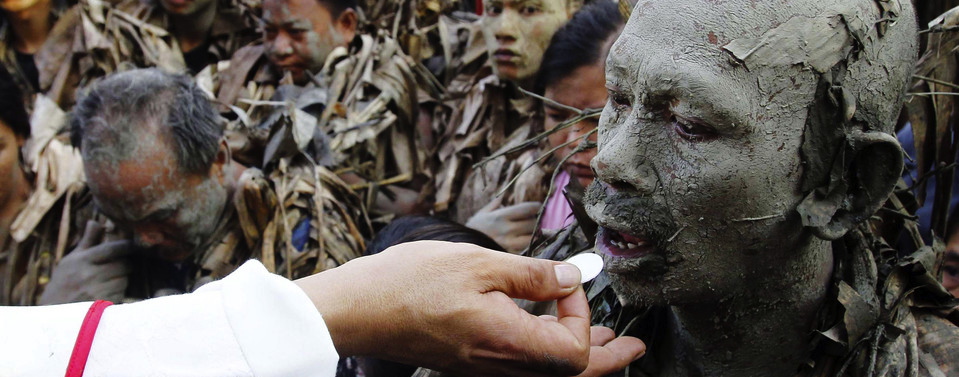
To Make The Plebs Sancta Dei

People receiving the Eucharist in Bibiclat, Philippines on the feast of St. John the Baptist

When I first turned to take account of the sprawling landscape of Christian tradition which lay just behind me but of which I had never known, I had a certain sense of alarm, like discovering suddenly I was standing on the edge of a cliff.  The shear size of the landscape spreading out over time and space and encompassing all sorts and conditions of people and places affected my soul, and it changed my whole perspective.  And time and time again, I found, as I read about our Christian ancestors, that the center of their life in God and with each other was what I had grown up calling the Lord’s Supper, though it has more often throughout history been called the Eucharist (Thanksgiving). Continue reading

Undefinable Religianity

Empty Pews A woman named Karen Armstrong was on NPR’s Fresh Air several days ago describing her new book The Case For God. Just going on what I heard from the interview, having not actually read the book, it sounded as though she doesn’t make a case for “God” at all, but for a contemplative and/or ritualistic life that spurs you to love and compassion for mankind. She used the word “religion” a lot. Love and compassion for mankind is one thing –and it’s wonderful–, but she incorrectly equated that with “God,” effectively wrecking the rhetorical structure that allows the word “God” to function. A few days after that I heard Ken Burns on All Things Considered describe how he featured in his new National Parks documentary naturalist John Muir, whose strict Calvinist father beat him as a small child. Carrying the scars of that “oppressive Christianity,” Muir came to explore the American Sierras and was spiritually “liberated,” and he was able to “devise a new faith, based in nature.” Continue reading