Tag Archives: Bible

Restitutio Omnium, Part 4: But What About…

If over the course of the first 3 parts of this series I’ve in any way obscured rather than clarified my thesis, let me here explain it… No, there is too much; let me sum up: I believe—through Scripture, tradition, and reason—that because God is all-Good, all-Knowing, and all-Loving, he, though he allows evil for a time in his Creation, will defeat all evil and save all creatures. He necessarily wants to save all because he loves all, knows how to save all because he knows all, and has the power to save all because he is ‘all-mighty.’ He will do this without violating any rational creature’s free will because free will, by nature, is teleological—always looking for the ultimate Good (who is God)—and will, by God, eventually be liberated from whatever ignorance, error, or pathology that might keep it from recognizing and turning to the loving Maker of all. Again, reason emphatically leads to this conclusion, but Scripture and tradition also support it, though with language ambiguous enough to allow others to reach different conclusions and present objections to this thesis of universal restoration. I now want to address some of those objections head-on.

Continue reading
Restitutio Omnium, Part 3: Scripture and Tradition

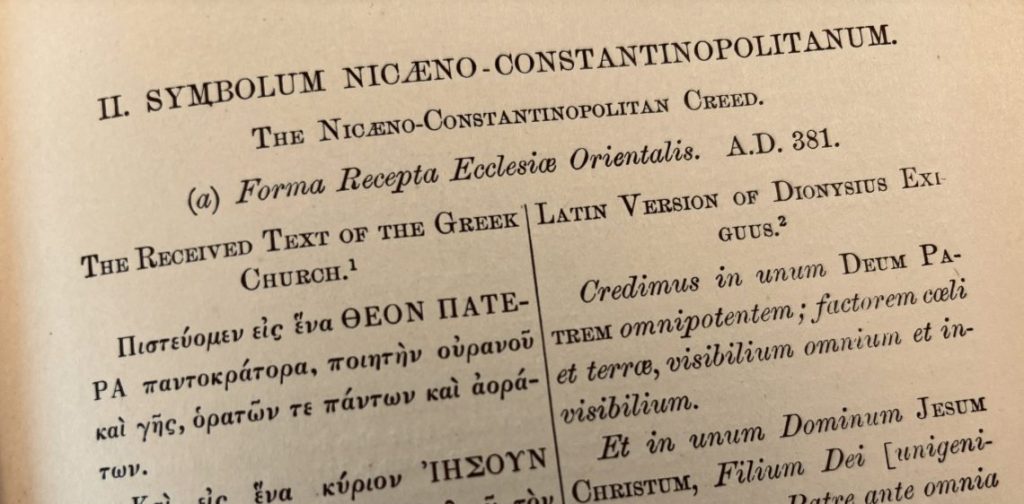
I’m neither a Biblical nor Patristics scholar. I don’t know classical or koine Greek, don’t know Latin, and I’m not well-read-enough even in translated primary sources to claim any expertise. But I have been expanding my knowledge of both the Bible and the Tradition of the Church through amateur study as much as I can. And as my moral and philosophical reasoning over these last 8 to 10 years has increasingly discerned the necessity of a total reconciliation of all rational creatures to their Creator, I have happily learned that, contrary to my long-held indoctrinated position, the Scriptures and Tradition (of which the Scriptures are really a part) not only do not disprove the notion of restitutio omnium, but they amply support it.

Continue reading

Lesslie Newbigin on Knowing

Newbigin

How can we know things? It’s an important question which isn’t as easy or obvious to answer as you might first think. In fact, it’s such a tough question that there’s an entire branch of philosophy dedicated to answering it called epistemology. But it’s not just a question for the specialists with their thought experiments and fancy terms; it should be a question that we all think about regularly. Why? Because the way we operate in this world, the choices we make, and much of our identity is wrapped up in what we believe, what we know or think we know, and why we think we can or should believe it. Continue reading

Injury, Filth, And Transgression

Return of the Prodigal Son - Rembrandt

The parable of the prodigal son contains depths of wisdom and profundity which, in all likelihood, I will never attain in this life.  Twenty centuries of reflection on this story have greatly profited the Church, and I recommend reading the Saints and Divines for their illumined teaching on it.  I would, however, like to offer my own reflection, not as a supplement to anything lacking in the tradition of the parable’s interpretation, but merely as a (rather impromptu) observation of how I see it speaking into a recurring experience in my own life. Continue reading

Story

hu0210615
I’ve come to a point in my life, via many roads merging and intersecting with many ideas and experiences, where I can not only look back over my own journey, but over a sweeping landscape that goes way beyond where I began. It’s a (self) realization that ironically has taken me way past myself. What I’ve realized is the history of the world is massive. If every day this world has seen, every thought, accomplishment, and life of every human being, every town, society, and people group were a raging torrent flowing through the wide channel of time, I am, comparatively, a single cubic inch of water somewhere within it being swept along, completely affected, completely unaffecting. Continue reading